What is Vibe Coding? The Complete Guide to AI-Powered Development
Vibe coding is transforming how we build software. Here's everything you need to know about this new approach to development—and how to get started.
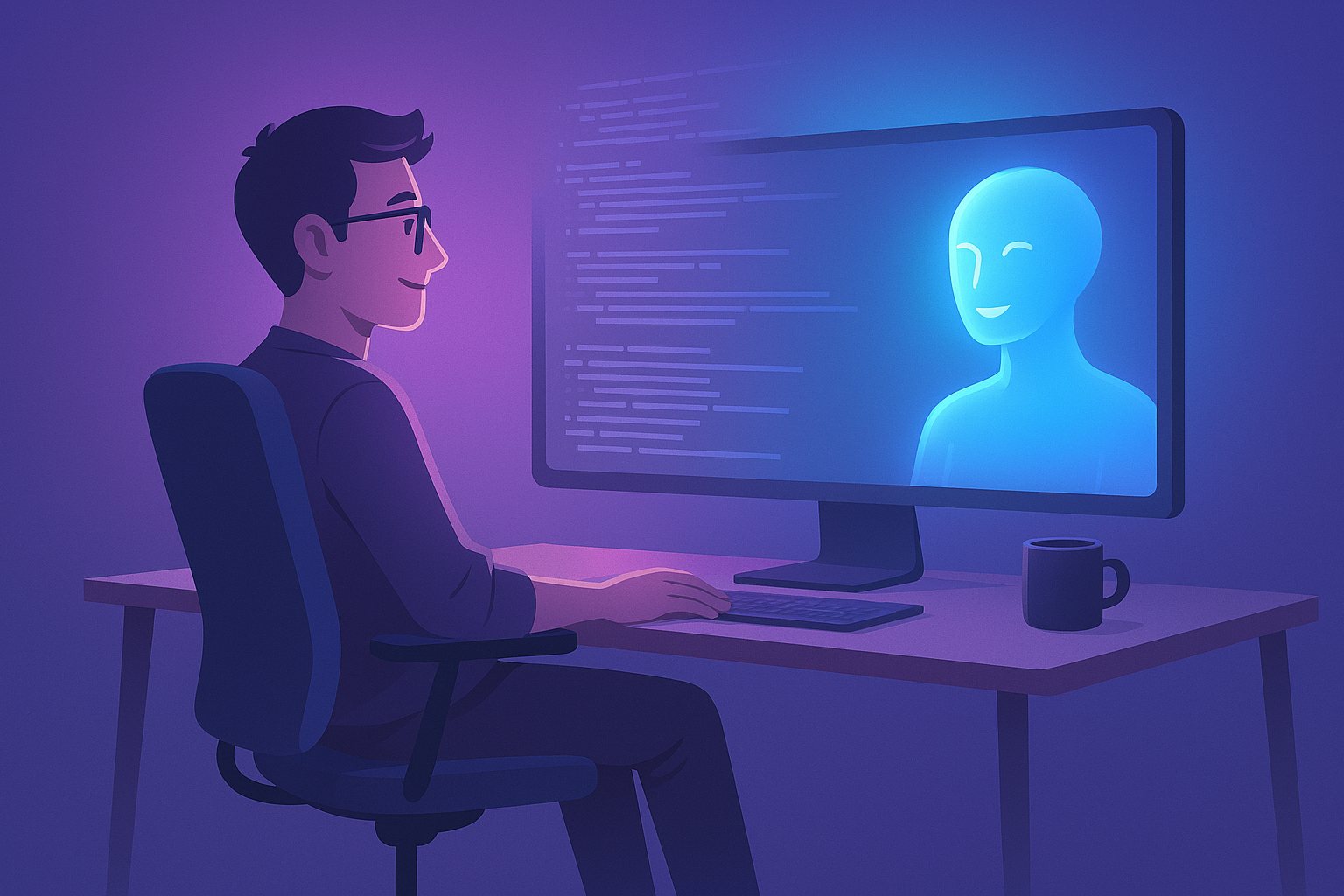
In February 2025, AI researcher Andrej Karpathy posted a simple observation that captured something developers had been feeling for months: he'd been building a project "entirely through prompting" and barely looking at the code. He called it vibe coding.
The term immediately resonated. It described a fundamental shift in how software gets made—one where natural language replaces syntax, and the developer's role transforms from writing code to directing AI.
But what exactly is vibe coding? How does it work? And is it actually useful, or just hype?
This guide breaks it all down.
Vibe Coding, Defined
Vibe coding is a development approach where you describe what you want to build in natural language, and AI generates the code for you.
Instead of writing functions line by line, you write prompts. Instead of debugging syntax errors, you refine your descriptions. Instead of memorizing APIs, you explain your intent.
The "vibe" part is key. You're not precisely specifying every detail—you're conveying the essence of what you want and trusting the AI to figure out the implementation.
Here's how Karpathy described it in his original post:
"I just see stuff, say stuff, run stuff, and copy paste stuff, and it mostly works."
That's vibe coding in a sentence.
How Vibe Coding Actually Works
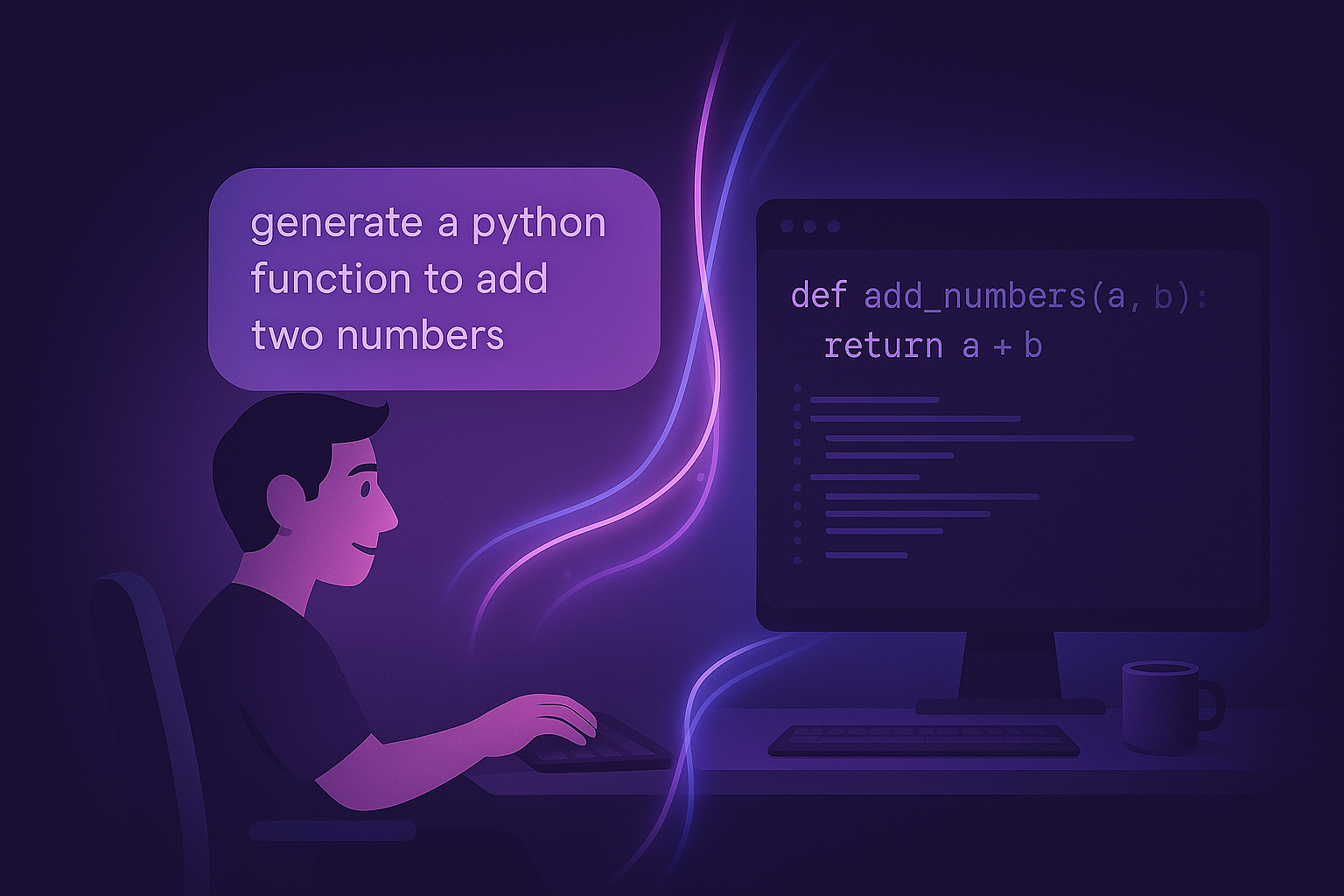
A typical vibe coding session looks something like this:
- You describe what you want: "Build me a landing page with a hero section, three feature cards, and an email signup form"
- The AI generates code: It produces HTML, CSS, JavaScript—whatever's needed
- You run it and see what happens: Often it works. Sometimes it's close but not quite right
- You refine through conversation: "Make the buttons rounded" or "The form should validate email addresses"
- You accept what works: When it looks right and functions correctly, you ship it
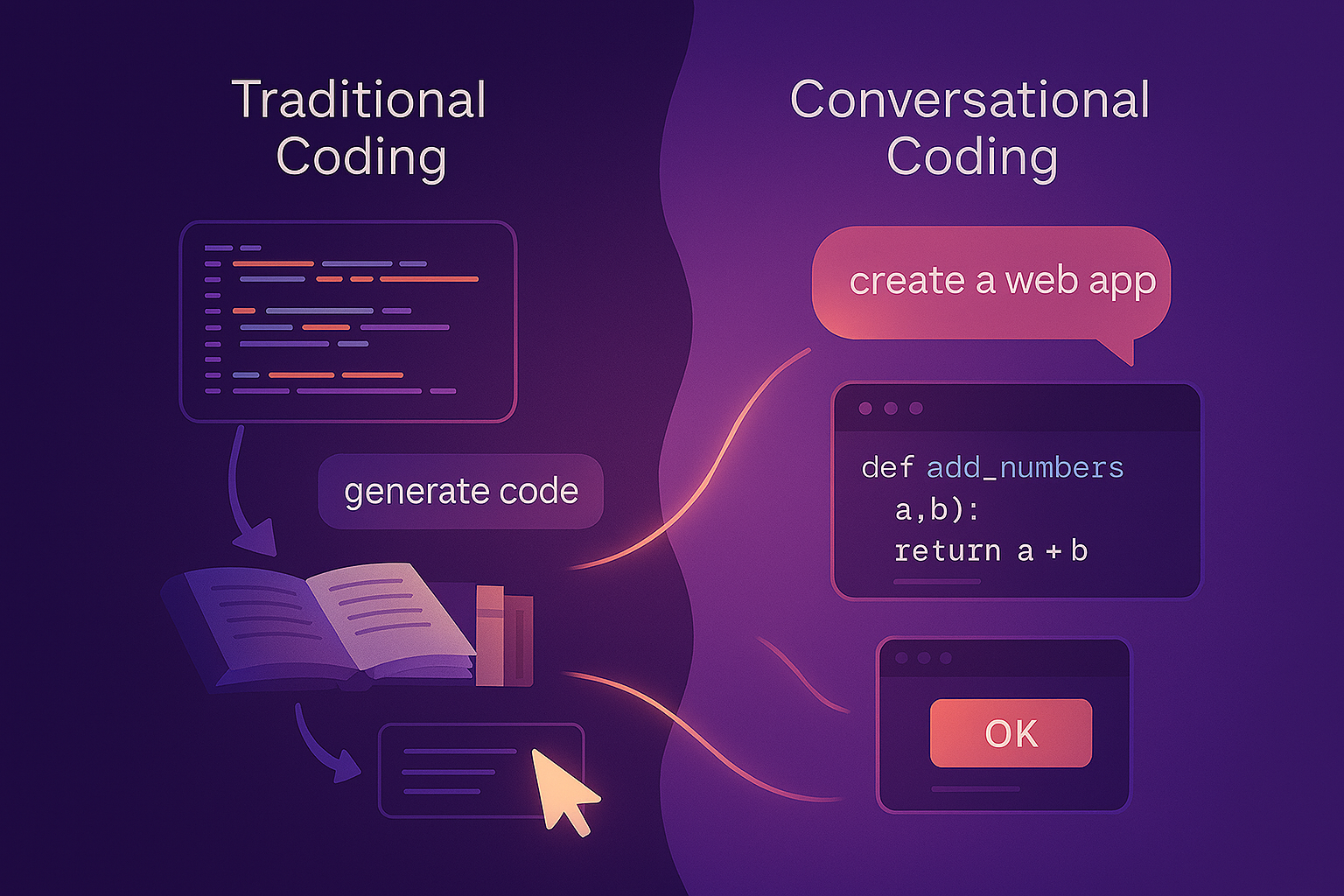
The key difference from traditional development: you're working at the level of intent rather than implementation. You're describing what, not how.
The Tools That Make It Possible
Vibe coding emerged because AI coding assistants became genuinely capable. The main tools enabling this approach include:
💬 Claude
Anthropic's AI assistant excels at understanding context and generating clean, working code across multiple files
🔮 Cursor
An AI-native code editor built around the conversational development workflow
🤖 GitHub Copilot
Autocomplete on steroids, now with chat capabilities for more complex requests
🔧 Replit
Browser-based development with AI assistance built in, great for quick prototypes
🎨 v0 by Vercel
Specialized for generating React components and UI code from descriptions
Each tool has different strengths, but they all enable the same core workflow: describe what you want, get working code back.
What Vibe Coding Is Good For (And What It's Not)
✅ Great For
- Prototyping and MVPs — Go from concept to working demo in hours
- Learning new technologies — Describe what you want and learn from the generated code
- Repetitive tasks — Boilerplate, CRUD operations, standard patterns
- Side projects — Speed matters more than perfection
- Getting unstuck — Fresh approaches to tricky problems
❌ Not Ideal For
- Production systems at scale — You need to understand every line
- Security-sensitive code — Authentication and encryption require expertise
- Novel algorithms — AI recombines patterns, it doesn't invent
- Highly specific domains — Niche frameworks often produce hallucinations
- Team codebases — Ununderstood code becomes technical debt
The Mindset Shift
Vibe coding requires thinking differently about development.
From precision to iteration: Traditional coding rewards getting it right the first time. Vibe coding rewards fast iteration and quick feedback loops.
From implementation to architecture: When AI handles the code, your job becomes defining structure, making design decisions, and ensuring pieces fit together.
From syntax to communication: The bottleneck shifts from knowing programming languages to clearly articulating what you want.
From writing to reading: You'll spend more time reviewing and understanding generated code than writing it from scratch.
This isn't necessarily easier—it's different. Clear communication is its own skill.
Getting Started with Vibe Coding
Ready to try it? Here's a practical starting point:
🚀 Your First Vibe Coding Session
Pick a small project: A personal website, a simple tool, a utility script. Something with low stakes.
Choose your tool: Claude, Cursor, or Replit are all good starting points.
Start with the end in mind: Describe the finished product first, then work backward to implementation.
Be specific about constraints: "Use vanilla JavaScript, no frameworks" or "Make it work on mobile" helps AI make better choices.
Iterate in small steps: Don't try to generate an entire app at once. Build piece by piece.
Actually read the code: Vibe coding works best when you understand what's being generated, even if you didn't write it.
Try The Vibe Machine
Want to experience vibe coding in action? Our interactive tool generates startup ideas by combining audiences, problems, and AI tools.
Launch The Vibe MachineThe Future of Vibe Coding
Vibe coding isn't replacing traditional development—it's expanding who can build software and how quickly ideas become reality.
For experienced developers, it's a productivity multiplier. For newcomers, it's an accessible entry point. For everyone, it's a glimpse of where software development is heading.
The developers who thrive will be those who learn to work with AI effectively—understanding both its capabilities and its limitations, knowing when to vibe and when to code by hand.
The vibes are good. The code is flowing. And we're just getting started.
Building something with AI? Share it with us on X @vibecodemeaning.
Frequently Asked Questions
Who invented vibe coding?
Andrej Karpathy, an AI researcher and former Tesla AI director, coined the term in February 2025 in a social media post describing his experience building software almost entirely through AI prompts.
Is vibe coding real programming?
Yes—you're still creating software that runs and solves problems. The approach is different, but the output is real, functional code.
Do I need to know how to code to vibe code?
Some programming knowledge helps you evaluate and debug AI output, but vibe coding has a lower barrier to entry than traditional development.
What's the best AI for vibe coding?
It depends on your workflow. Claude excels at complex, multi-file projects. Cursor integrates AI directly into your editor. Replit offers an all-in-one browser environment.
Will vibe coding replace developers?
No—it changes what developers do. The role shifts toward architecture, design decisions, and quality control rather than line-by-line implementation.
About the author: This guide was created by the Vibe Coding community to help everyone understand this new approach to building software. Have questions? Reach out to us.